
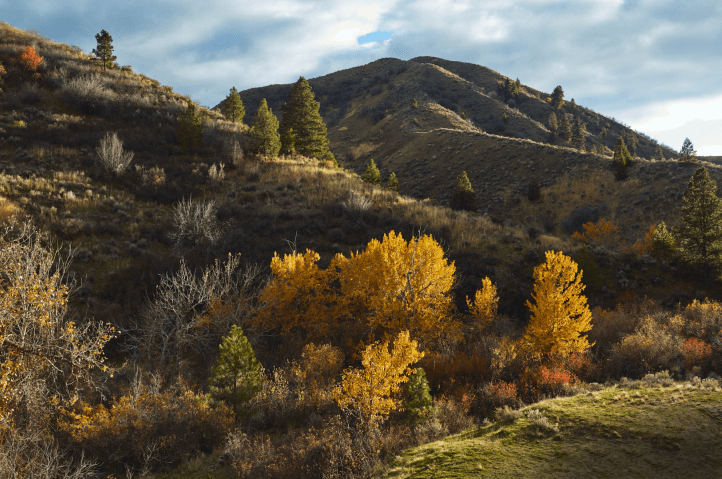
I spent seven years as an outdoor portrait photographer in my hometown of Boise, Idaho from 1998-2006. It was joyful work. I was in my 20s, fueled by energy and ambition, chasing children with a heavy camera through the winding paths of Kathryn Albertson Park or capturing family milestones beneath a canopy of trees.
There was a deep satisfaction in “making” a good photograph in the field. Beyond the craft, I took pride in the fact that I was leaving a trail of family heirlooms in homes all over the Treasure Valley. I miss the lasting impact a good portrait can have on a family’s history. I still get messages from past clients thanking me for photographs I made of their loved ones decades ago.
However, there was a significant catch: my livelihood was entirely at the mercy of the elements.
If it was raining, excessively windy, or just generally “ugly” like the barren, brown landscape every March I couldn’t work. It was a precarious, stressful way to earn a living. I sought stability so I sold the business to buy a portrait studio in San Juan Capistrano, California where I specialized in formal studio portraiture.
My years of outdoor portraits taught me to research Boise’s climate. I noticed a fascinating pattern: on average, Boise’s high temperature climbs or drops by 10 degrees every month.
It is a remarkably symmetrical cycle. January serves as the anchor with an average high of 30°F. From there, the mercury climbs like clockwork: 40° in February, 50° in March, 60° in April, 70° in May, and 80° in June, finally hitting its 90° zenith in July. Once the peak passes, the steady descent begins: 80° in August, 70° in September, 60° in October, 50° in November, and 40° in December, before returning to the 30° baseline in January.
In a town where the weather is very temperamental, this 10-degree rule was the one thing I could rely on.
 jonballblog.com